The joy of reading

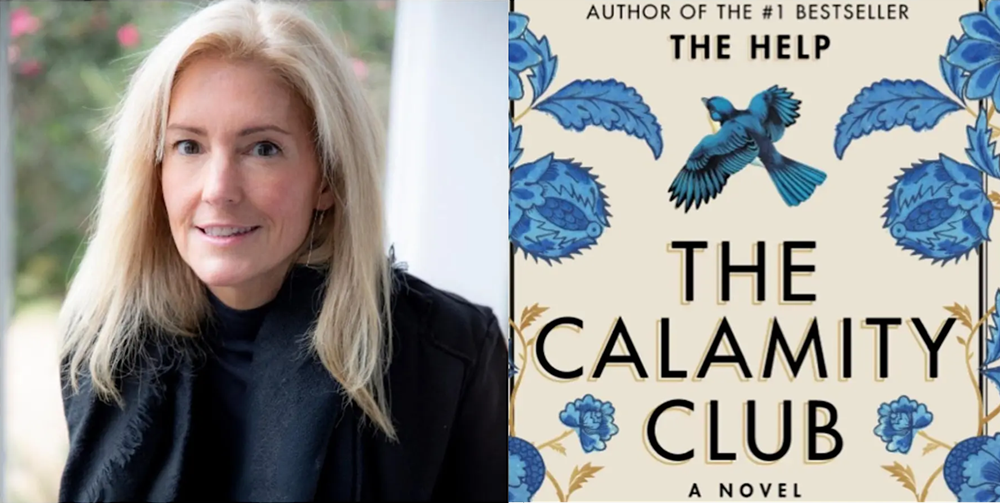
The Calamity Club by Kathryn Stockett
The courier delivers a parcel of books. Weighty. Aha, two or three books, I think. It can barely fit through the gap between the gate and the post. But no, it’s one book, 638 pages long. I am a bit deflated. We no longer live in the era of the great Russian writers, when readers could sit undisturbed for hours beside the fireplace on winter afternoons and evenings, without the distractions of TV, cellphones, tablets, microwaves and air fryers beeping away.
But from the very first page it grips me, and the further I read, the happier I am about the size of it. It’s like stumbling across an omnibus edition of The Famous Five as a child and knowing: I’m going to be able to read all weekend.
Kathryn Stockett is the author of the bestseller The Help, which was also made into a film. This novel is once again set in the Deep South, in Oxford, Mississippi. There are two narrators: an eleven-year-old child, Meg, and Birdie, a spinster in her early twenties — remember, this is the Deep South in 1933. What the two narrators share is attitude, fire, inner strength. They need it.
Meg’s mother goes into town and never comes back. She never knew her father. She survives on her own for a week and later starts eating books. Ulysses does not taste good, she declares. Then a doctor discovers her and she is sent to an orphanage: The Lafayette County Orphan Asylum for Girls. According to a framed notice at the entrance, everyone is welcome except: “Coloreds, Indians, Jews, Mexicans, Oriental types, Twins, Anyone who has or has had Leprosy, Consumption, Missing Limbs or Harelip. No Boys. No Sick Children or anyone of a Retarded Nature. No Girls over the age of twelve. No Women in the Family Way.”
The Orphan, as the children’s home is called, is a hellhole. It is a monument to Christian hypocrisy: the foyer and staff sitting room are elegant and colourful. Wealthy social butterflies volunteer there, rocking the babies. There is a shortage of babies. Behind the cheerful façade things look bleak. The older girls who are deemed unadoptable are kept in the attic room, where the roof leaks and the walls are covered in mould. They are not allowed to mix with the babies and toddlers. Nobody touches them, and they are constantly preached at about how their immoral and feeble-minded mothers abandoned them, and how they must not grow up to have ten children by ten different men. Their food is so poor and so scarce that the few whose periods have already started stop menstruating. Meg is up in that attic, but because she drew a sketch of the baby Jesus giving the middle finger, she is forbidden to attend school — though she is exceptionally intelligent — and must spend all day sitting in a musty little room with boarded-up windows.
The head of the orphanage, Miss Garnett, makes Cruella de Vil look like a philanthropist. She is fanatical about preserving morality and racial purity. She has a particular hatred for Meg, though she is also obsessed with her. Her cruelty knows no bounds. At twelve she sends the girls to a cannery, where their pitiful wages are docked for food and lodging. That day is drawing near for Meg.
Birdie is the eldest daughter caring for her mother and grandmother. She is a bookkeeper and one of the few people still employed in their town, Lafayette. Her beautiful younger sister Frances attended finishing school in Oxford and married rich immediately afterwards, settling there. She never contacts them. Birdie is delegated by her mother and grandmother, Meemaw, to travel by train to Oxford and ask Frances for a loan, because property taxes threaten to cost them their home.
Frances lives in her mother-in-law Viktoria’s mansion with her boyish husband Rory, who has no backbone and has never consummated the marriage. Frances is vain and lazy, thoughtlessly selfish and cruel to Birdie. She is one of the volunteers who occasionally rocks babies at the Orphan. Her role model is Miss Garnett. Birdie is manipulated into sorting out their books for free, and there she meets Meg. Kindred spirits.
I won’t tell you more. I recommend it to the skies. It’s a cross between Jane Eyre, Lessons in Chemistry, The Cider House Rules, David Copperfield and every wonderful book I’ve ever read. It’s funny and heartbreaking. It's never dull for a moment. I envy those who get to open it for the first time.
The Calamity Club by Kathryn Stockett was published by Penguin Books and costs R405 at Exclusive Books.
What the Night Brings by Mark Billingham
This is the nineteenth Tom Thorne book. I’ve read one or two of them over the years. Thorne is a bit like John Rebus: tough, stubborn, with a bone-dry sense of humour. He is a detective, like Nicola Tanner, who also features strongly in the series. They are based in London.
Sometimes I think I’m a little weary of police procedurals. All the procedure, the forensic evidence, the inevitable gruesome post-mortems, the personal problems, the corruption within the force. But Billingham is entertaining, I tell you. Character-driven, which makes it worth reading. And, naturally, suspenseful. You want to get to the bottom of it all.
Someone is murdering police officers while they are on duty. Four are killed with poisoned doughnuts, someone is run over, someone else stabbed to death. The reader knows who he is: the lonely surfer of the dark web with his tragic past and simmering hatred. The police also work out fairly quickly who he is, but how do they track him down and prove his guilt? And who is helping him? How does he always know exactly what the police are going to do next and where they will be? There is clearly a mole, a leak.
It’s gritty as well as humane. Because I’ve read so many of these novels, I started suspecting who the informant on the inside was — the corrupt policeman and traitor. Rape is a central theme, and that always makes the blood boil. It makes an emotional claim on the reader.
Mark Billingham is regarded as one of the great crime writers. This book is fairly hefty too: 415 pages. My eyes are tired, but I am deeply grateful for the gift of books.
What the Night Brings by Mark Billingham is published by Little, Brown Group and costs R455 at Exclusive Books.