A fatal love

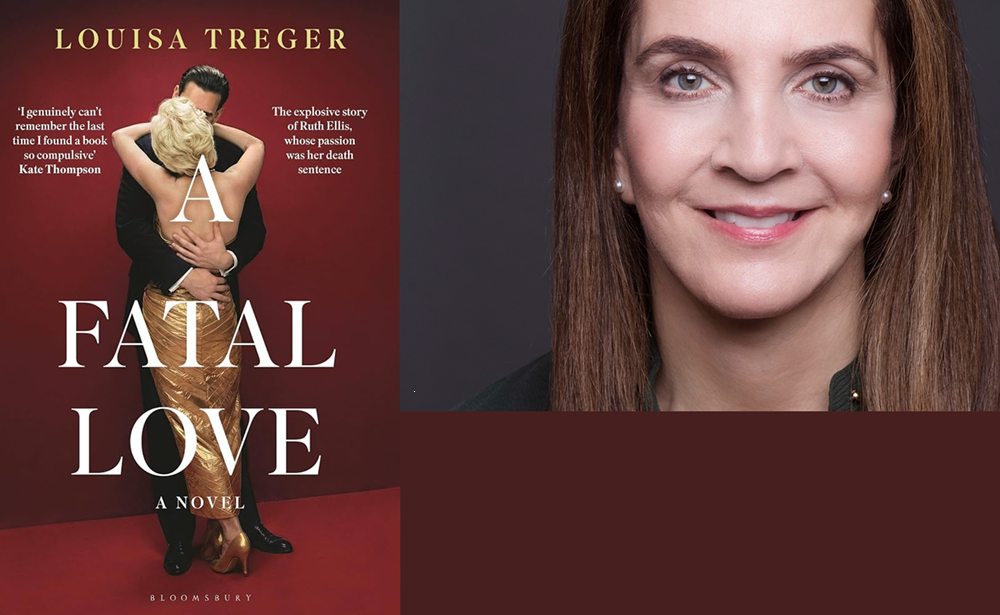
A Fatal Love by Louisa Treger
Louisa Treger has a South African connection: her mother was born here. She is a British author of acclaimed historical fiction. This book is based on the murder case of Ruth Ellis, a club manager and hostess who looked a little like Marilyn Monroe and lost both her heart and her head over a boyfriend from a higher social class. It was the late 1940s. David Blakely was a handsome racing driver and a rogue who drank too much and sponged off women.
The name rang a faint bell, but I didn't want to Google it to find out whether Ruth was eventually pardoned. I wanted to let the story unfold. And Treger is a master storyteller who shows rather than spells things out.
She brings Ruth Ellis to life on the page: a beautiful young woman born into poverty who, from an early age, was exposed to her drunken father's brutality towards her mother, her sister and herself. That was normality to her. She wanted to make something of herself and started out as a model, posing in her underwear for photographers taking “glamour shots”. Then she was asked to become a hostess at a club in London. The position fit her like a glove; she enjoyed flirting with men and making them desire her, getting them to spend far too much money on drinks, and sometimes even taking one home. Not for payment, but nevertheless as an unspoken part of her job description.
She worked her way up and was eventually asked to manage a club. She was even given a free flat above the club. Now her little boy, Andy, could come and live with her. He was the result, during the war, of a passionate affair with a Canadian soldier who adored her and treated her like a queen, but neglected to tell her that he had a wife and three children back home.
After that, she married a dentist, George Ellis. She believed he could offer her and Andy security, but George was an alcoholic like her father, and a mean drunk to boot. They had a little girl, Georgina, who lived with Ruth's parents until her father insisted, as a condition of the divorce, that she be given up for adoption.
One evening, the handsome, self-assured David Blakely saunters into the club Ruth manages. At first they clash because of his bullying behaviour, but soon different kind of sparks begin to fly between them. Their attraction is deadly and destructive. He moves in with her and starts exploiting her financially. His parents give him an allowance, but it isn't enough to fund his drinking and his racing-driver dreams. He has an ugly temper and frequently beats her black and blue. And afterwards, of course, he is terribly sorry and declares that he cannot live without her. Yet he never introduces her to his parents and occasionally lets slip that she is nothing but a common tart.
Her love for him is like a consuming fire that scorches away all reason. She forgives him time and again, even when it comes to light that he has a fiancée of his own social standing, apparently chosen to please his mother. She has lost herself completely in him. He becomes like a drug in her bloodstream:
“But this existence he had drawn her into, where everything was heightened – more intense, more exciting – had her hooked.”
She realises that she is placing him ahead of her children's welfare, but she is as helpless as a fly in a spider's web: “... she couldn't stop herself. He was light and oxygen to her. There were times when it seemed she could not breathe outside his presence.”
May the gods protect us from such a passion. Ruth realises that she will forgive him and take him back every time, and that the cycle of violence and abuse will never end until he is dead. That he simply has to die. In a haze of alcohol and pills, she shoots him in the street, four times. A stray bullet hits a passer-by in the hand. She pleads guilty and declares that she wants to die.
There was another man in her life, Desmond Cussen, also a racing driver. A steady man who worshipped the ground she walked on and often helped her out financially. He was always there for her, but he bored her. David was in her blood like holy wine. She couldn't drink a case of him and still be on her feet.
There is also a female solicitor assisting Ruth's barrister. Kitty is acutely aware that this is a man's world, where women stand no chance of being treated as equals.
Treger manages to show rather than sermonize how women were marginalised, not taken seriously and looked down upon by men. She shows how Ruth was, in fact, a trailblazer: a strong woman who provided for herself and her children until she encountered her Achilles heel. How the cards were stacked against her. On top of everything else, she is reluctant to open up about her obsession, and is of little help to her defence team.
This reads like a contemporary crime thriller with considerable substance. Treger neither romanticises Ruth nor turns her into a victim. Nor does she portray her as a heartless murderer. The reader encounters her with all her blind spots and selfishness, while remaining acutely aware of the social inequality between the sexes, a gap that has still not been entirely bridged today. Both the novel and the true events on which it is based constitute an indictment of patriarchy.
Treger has an extraordinary talent for reviving the past in full colour. I highly recommend this book.
A Fatal Love by Louisa Treger is published by Bloomsbury and costs R455 at Exclusive Books.