Second chances and spooks

Is everything you read actually your own story, just as every character in your dream is really you? Sometimes I think so. Books are mirrors that reflect your life back to you; characters are avatars through whose eyes, with whose bodies, you experience situations.
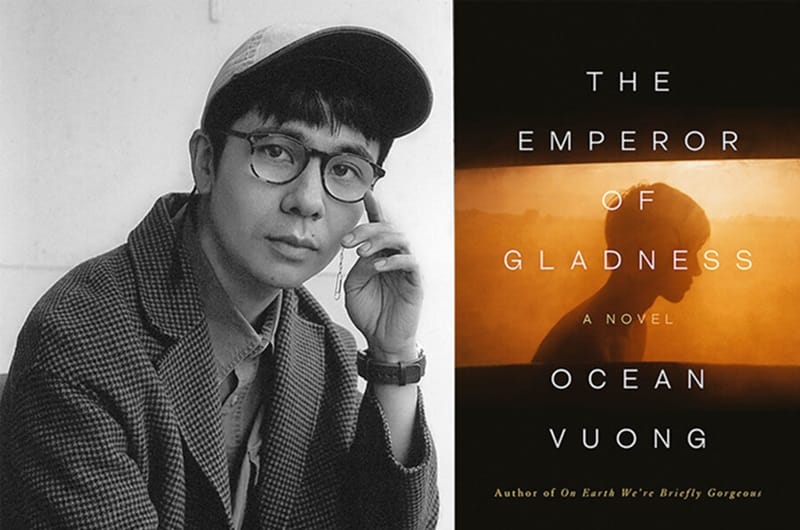
In these chaotic days, The Emperor of Gladness stood on my shelf for a long time, until a friend borrowed it and fell in love with it. I trust Diane’s judgement, so I pulled it closer. And what a journey it was.
The first chapter is a lyrical ode to an ugly town, East Gladness. It's like a long poem. It reminds one of Mary-Chapin Carpenter’s song “I am a Town.”
It’s lovely and atmospheric, but gives a misleading impression of the rest of the book, which is quite plot- and character-driven.
Personally, I would’ve started with chapter 2, where a boy stands on a bridge, about to jump.
The main character, Hai, an American boy of Vietnamese descent, is struggling to process an immense amount of pain. His first boyfriend and twin soul died of an overdose. As Hai reflects: He wanted to feel more than one thing at a time. As they sing in country music: “It’s gonna take a whole lot of whiskey to make this heartbreak go away.” In Hai’s case, it’s pills.
When he’s on a bridge in the rain, on the verge of jumping, someone calls out to him. It’s an elderly woman of Lithuanian descent, Grazina, who lives on the hill by the water’s edge. She calls him over. Grazina is a delightful character: eccentric, contrary, half-demented with flashes of lucidity and a dark sense of humour. She renames him Labas (Lithuanian for “Hello”), based on his name, Hai. She shares with him “the secret to getting rid of every sorrow known to man,” and I immediately sat up straighter. Grazina went hungry during the war and her therapy is to throw bread rolls on the ground outside and stomp on them.
Anytime I feel my soul going dim … I just step on some rolls and it’s like a magic spell.
Hai survives and becomes her caregiver because he’s run out of options. A peculiar bond develops between them. Money is tight and he gets a job at a fast food franchise, The HomeMarket. It's more of a disenfranchise, because everyone who works there is a misfit or outsider. Hai’s cousin Sony is mildly disabled and far along on the spectrum; the manager is a burly gay woman who wrestles in her free time; the grill cook is a melancholic black man; on the till is a drunk woman; and there’s a Russian guy working to keep his sister in rehab. They become like family.
Meanwhile, Hai finds a stash of Grazina’s late husband’s opioids, and he floats through the days. Grazina also starts drifting, and her semi-estranged son threatens to sell her house and place her in a high-care facility.
It’s about memory, and people staggering under its weight:
“Because to remember is to fill the present with the past, which meant that the cost of remembering anything, anything at all, is life itself. We murder ourselves, he thought, by remembering.”
Everything is steeped in loss and it’s fairly dark, but there’s redemptive humour – like the little crew piling into a minibus to go watch a wrestling match. There are nightmarish scenes too, like the day the group earns extra money by helping to shoot and slaughter hundreds of pigs.
It culminates in an unforgettable road trip with a peculiar mission. You need to experience it for yourself – I just wanted to alert you to it. There are echoes of Haruki Murakami, John Irving, Markus Zusak, Anthony Doerr, Michael Cunningham, and every author I love. It’s a thick book – 400 pages – but you end up reading slower and slower. I’m going to hold on to this one.
I’d like to quote something from the back cover that perfectly captures the tone of the novel:
Formal innovation, syntactic dexterity, and the ability to twin grit with grace through tenderness – are on full display in this unforgettable story of unexpected friendship and how far we would go to possess one of life’s most fleeting mercies: a second chance.
Ocean Vuong is a poet, and now I will have to get my hands on his collections: Night Sky with Exit Wounds and Time is a Mother. He’s also the acclaimed author of the novel On Earth We’re Briefly Gorgeous. Apparently, he once worked as a fast-food server, like Hai. He was born in Saigon. I want to read every word he’s ever written.
The Emperor of Gladness by Ocean Vuong is published by Penguin Random House UK and costs R329 at Amazon SA.
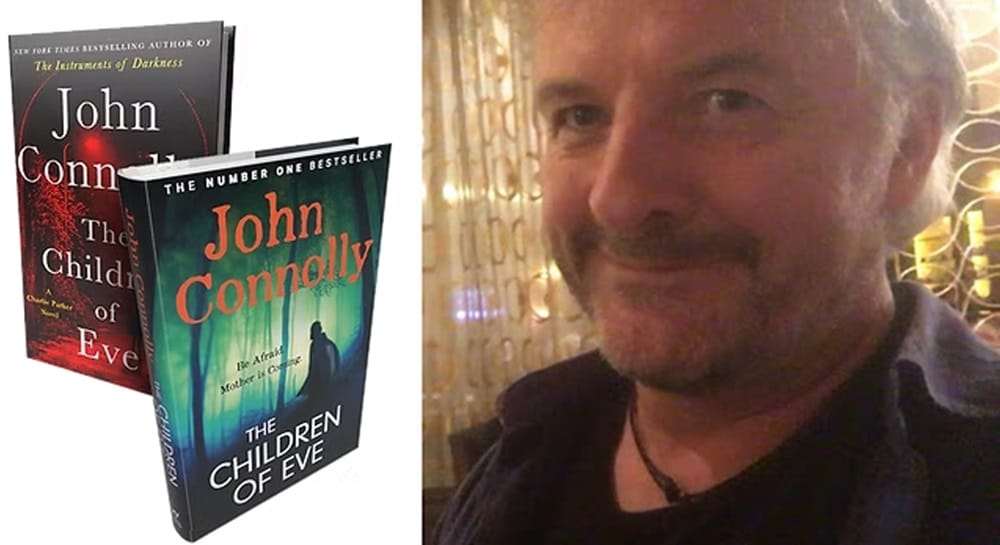
To recover, I reached for the new Charlie Parker novel by John Connolly.
Charlie might be an acquired taste—or perhaps an intuitive one. I love Charlie. He talks to dead people. His wife and daughter were murdered, and his daughter now watches over him. He’s a private investigator, regularly gets beaten up, and doesn’t experience a single day or night without pain. He’s a just man, and not a drinker.
In The Children of Eve, he helps an eccentric sculptor track down her boyfriend, who has mysteriously disappeared. Naturally, he kicks open a hornet’s nest—both in the natural and the supernatural realm.
Look, if you don’t believe in the unseen, you’ll need a generous dash of willing suspension of disbelief for Connolly’s novels. But if, like me, you believe in everything under the sun, it makes for fascinating reading.
I tried to count, and it seems there are already 22 Charlie Parker novels. Dark, gritty, ominous, and suspenseful. I highly recommend it.
The Children of Eve by John Connolly is published by Hodder & Stouhgton and costs R412 at Amazon SA.