
Fragments for the Traveller

Books one reads while travelling—especially during an exciting sea voyage—are taken in piecemeal and remembered in fragments. There are simply too many distractions. Coherence eludes you. You remember moments rather than plotlines.
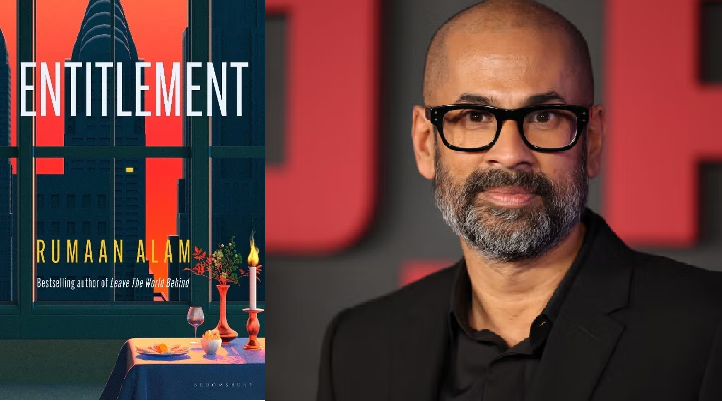
That was the case for me with Entitlement by Rumaan Alam— which is not a story with a particularly strong plot, anyway. It’s character-driven. The main character, Brooke, is a youngish black woman in New York. She starts working at a foundation that decides how and where a billionaire’s money will be distributed. She connects with the benefactor, who is in his eighties. He becomes like a mentor to her.
The newfound proximity to boundless wealth and luxury makes her giddy; it’s exhilarating. She sees how the one percent at the top of the wealth pyramid lives. Naturally, this makes her greedy, makes her feel as if she deserves it. Entitled.
It’s a kind of moral fable that leaves the reader uncomfortable and unsettled. It’s reminiscent of Jonathan Franzen’s novels. It makes you think about greed and ambition and all the less admirable aspects of being human. How does one keep a moral compass in the face of unimaginable wealth and unlimited access to deep pockets?
It’s ironic that I read it while rubbing shoulders with international sun-worshippers and jet-setters.
As one of my favourite authors, Louise Erdrich, notes on the cover:
“Should come with an undertow warning ... I was pulled under.”
Entitlement by Rumaan Alam is published by Bloomsbury Publishing PLC and costs R435 at Exclusive Books.
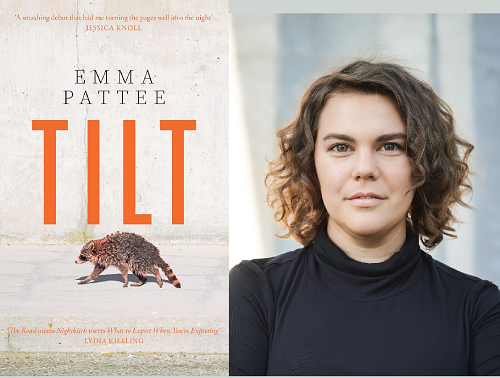
I read Tilt on a plane, more or less in one sitting, and it gripped and fascinated me—the kind of book I love. It's hard to believe it’s a debut. It’s lyrical, poetic, funny, and deeply thought-provoking.
Annie is in the last trimester of her pregnancy. She finally goes to Ikea to buy a baby crib. While in the store, a massive earthquake strikes—not unusual in Portland, where the book is set. Her handbag is buried under the rubble and she is without her phone or car keys. Heavily pregnant, she sets out on foot to the restaurant where her husband works, fortunately not in the part of the city that was destroyed.
Her husband is a struggling actor who had been invited to an audition on the day of the earthquake, but thankfully Annie had convinced him to go to work instead, because they needed the money. Or did she?
Annie’s dream was to become a playwright, but she works as an accountant, because few of us can afford our dreams.
Along the way she witnesses horror as well as humanity. She passes the time by talking to her unborn baby. She tells him about his father, how they met, their life, and about herself. She calls him “Bean”:
“You will not be like me, little kidney Bean. You will not chain yourself to a dream so big, so heavy, that you will spend years hauling it behind you, falling further and further behind until you try to let it go and realize you can't. The chains are gone; they've been gone for years. You are the chain.”
And:
“My first memory of your father goes like this: He's onstage, and he turns to the lead actress, Heather, and holds out his script and says: ‘How do you say this word?’ And she says scrumptious and he says scrumchiss and she says no scrumptousss. And he says, ‘Okay, got it, scrumchiss.’ And I just think, ‘Who cast this idiot?’”
When she finally arrives at the restaurant where he works, he isn’t there. He had swapped shifts to attend the audition—without telling her. The venue where the audition was held is in the area hardest hit. The bridges have collapsed. Only one remains, badly damaged but still hanging. That’s the one she sets out on, heavily pregnant, exhausted, and with blisters on her feet. Did he make it?
They had, after all, fought the night before because he wasn’t, like her, willing to give up his dream."
It’s a journey through hell, a nightmare. I couldn’t tear my eyes from the pages. I highly recommend it. I’ll be following Emma Pattee’s career with interest.
Tilt by Emma Pattee is published by HarperCollins and costs R594 on Amazon SA.
Another book that did hold my attention while on the road was a handily sized travel companion, Inside the Mind of Ted Bundy by Tanya Farber and Jeremy Daniel.
It remains fascinating to read about the train-wreck childhoods of disturbed souls. Of course, Huisgenoot always keeps us up to date on monsters and aberrations, but we forget so quickly. Ted was quite attractive and charming, and when young women started disappearing in the 1970s, no one suspected him.
In this little book, he is not glamourized, but the reader gets a glimpse into his dark psyche. The fact that his trial was broadcast only fed his narcissism and marked the start of a trend: cold-blooded killers craving the spotlight.
Farber and Daniel are crime writers who know how to maintain tension, with chapter headings like The Noose Tightens.
Inside the Mind of Ted Bundy by Tanya Farber and Jeremy Daniel is published by Gemini Gift Books and costs R370 on Amazon SA.

Now I’m back home, tackling stacks of books with great enthusiasm. Watch this space.

The Earthquake She Slept Through
She slept through the earthquake in Spain.
The day after was full of dead things. Well, not full but a few.
Coming in the front door, she felt the crunch of a carapace
under her foot. In the bathroom, a large cockroach
rested on its back at the edge of the marble surround; the dead
antennae announced the future by pointing to the silver eye
that would later gulp the water she washed her face with.
Who wouldn't have wished for the quick return
of last night's sleep? The idea, she knew, was to remain awake
and while walking through the day's gray fog, trick the vaporous
into acting like something concrete: a wisp of cigarette smoke,
for instance, could become a one-inch Lego building
seen in the window of a bus blocking the street.
People sometimes think of themselves as a picture that matches
an invented longing: a toy forest, a defaced cricket, the more
or less precious lotus. The night before the quake, she took a train
to see a comic opera with an unlikely plot. She noticed a man
in a tan coat and necktie who looked a lot like Kafka.
The day after, she called a friend to complain about the bugs.
From a distant city—his voice low and slightly plaintive—he said,
Aren't you well? Is there anything you want?
Mary Jo Bang