Dark side of the moon


Lee Child lives in England’s Lake District. It is said that one of his Jack Reacher novels is sold somewhere in the world every nine seconds. He has already sold more than a hundred million books and has received many awards. He received an OBE from the Queen.
These days he writes the Jack Reacher novels together with his younger brother, Andrew. I don’t know whether the books have lost a bit of steam for that reason. Maybe he’s simply tired. During the holiday I happened to read the very first Jack Reacher novel ever, and it was quite gripping and dynamic. And recently the newest, the thirtieth one, Exit Strategy. You can’t compare the two. Jack Reacher is still six foot five and weighs 250 pounds; he is still without a home or possessions, hopping onto Greyhound buses and travelling wherever the route takes him. But has something formulaic crept in, a predictability?
In the latest book Reacher gets off the bus in Baltimore. He wants to see a show there that evening and then continue his travels. But we already know that he repeatedly becomes entangled in the problems of small towns. He’s a kind of Superman who beats up villains and solves crime wherever he goes.
In Baltimore he sits down in a coffee shop, his back to the wall and his face towards the entrance, as always. He notices how a couple are being swindled out of their savings by two con artists. Because he is Reacher, he follows the crooks, knocks them unconscious and takes the briefcase with money to return it to the victims. Naturally, he has now stepped on the wrong toes. At the same coffee shop, as he passes by, a man slips a note into his pocket. A cry for help.
The man, Gilmour, works at the harbour and is involved in a shady operation. A colleague was recently murdered at work, and he knows that he was the real target.
Of course Reacher doesn’t stay only for the music show he came for. He butts heads, breaks noses and undoes crooked schemes. As always. He will probably always have fans, but I think I’ve had enough of his heroics for now.
Exit Strategy by Lee Child and Andrew Child is published by Penguin Random House and costs R356 at Graffiti.

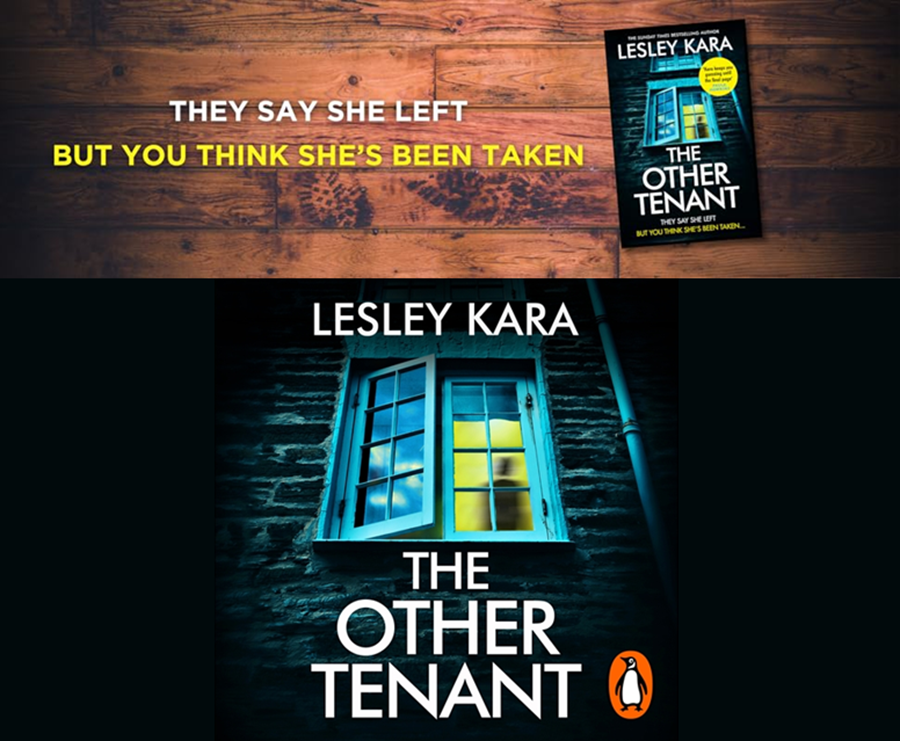
Lesley Kara has established herself as a writer of domestic noirs that sell like hot cakes. The genre of her latest offering, The Other Tenant, can be recognised immediately from the cover: black, blue and yellow. A lit window in a menacingly dark building.
Marlow is a property guardian. This means she doesn’t have a home of her own, but lives rent-free in vacant buildings, with the owners’ permission, to prevent vandalism and decay. She has to keep an eye on things. It’s not a stable existence and she has to move repeatedly, whether she wants to or not.
She is then asked to go and live in an old school building. The new owner wants to convert it into luxury apartments. Coincidentally, it is her old school, a Victorian building full of ghosts and sad memories. Her best friend died there in a fire for which she holds herself responsible. Everywhere there are echoes and omens.
It soon becomes clear that not everything is right in the school building. She lives there with nine other people, all rather eccentric and mysterious. The head property guardian is Rob, a pale soul who is on the spectrum and eats only instant noodles. He is definitely hiding something. On top of that, the girl who lived there before her has disappeared. Without a trace.
She comes across notes left by her predecessor that suggest criminal activities are taking place. She plays detective herself and becomes a target of the wrongdoers. But who can she trust? Throughout, she feels that she has made a huge mistake by going to live there.
It’s gripping, but if you ask me, too busy. Mysteries pile up and the reader can be sure of absolutely nothing. Marlow’s past unfolds, as does the reason why she is estranged from her parents. Perhaps she does find closure at the scene where her greatest nightmare played out.
The Other Tenant by Lesley Kara is published by Transworld Publishers and costs R285 at Exclusive Books.
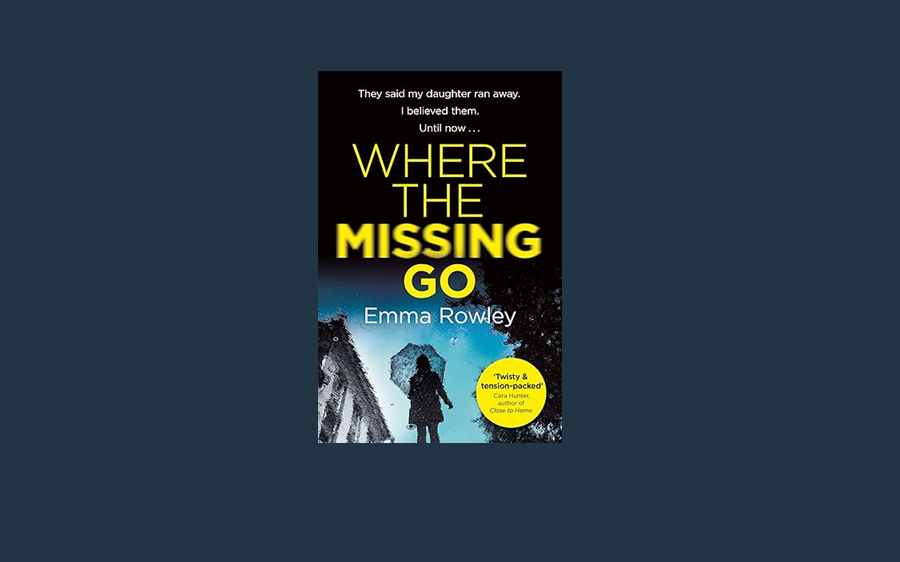
I read another noir, the kind I liked more. It’s less hysterical and busy. Where the Missing Go is an older book (2018) that I picked up in a second-hand bookshop. The cover is also black, blue and yellow, and it also deals with a missing girl.
The narrator, Kate Harlow, is the mother of a teenage daughter who has disappeared. She left behind only a note asking them to leave her alone. She sent a few postcards and then nothing more. Her mother is certain that she is still alive. The mother works at a helpline for children who have run away from home and want to send messages to their families, Message in a Bottle. One evening a woman calls: it’s Sophie, her daughter.
Years ago another girl also disappeared in their area. She looked a lot like Sophie, also left a note, and was never found. Now Kate throws everything she has into trying to track down her daughter. She makes contact with the other girl’s family.
Naturally, the police seem to do very little. The case is old. Everyone has given up hope except Kate. Sophie’s diary is found and there are new clues. She apparently had a relationship with an older man.
Of course there are red herrings, smoke and mirrors, but it’s an unputdownable thriller.
Where the Missing Go by Emma Rowley is published by Orion Books and costs R475 at Exclusive Books.